
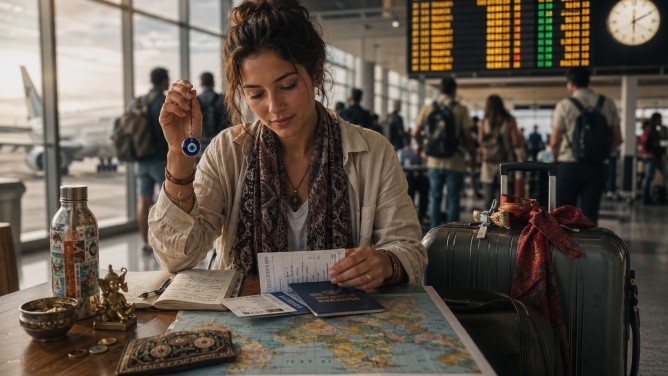
Embarking on a journey can be an exhilarating experience, often enriched by cultural traditions and rituals that travelers across the globe have embraced over time. These practices, steeped in superstition, aim to invite good fortune and ward off misfortune while on the road. Here are seven intriguing travel superstitions that persist in various parts of the world, each adding a unique dimension to the travel narrative.
In the Balkans, a simple clove of garlic is more than just an ingredient in the kitchen; it is a talisman against negative energy and the evil eye. Travelers from this region often tuck a clove into their luggage, trusting in its protective properties to shield them from bad luck during their adventures. Meanwhile, airplane rituals are common among travelers who believe in tapping the aircraft’s exterior before boarding as a means to secure a safe flight. For some, stepping onto the plane with the right foot first symbolizes starting the journey on a positive note, a gesture believed to usher in good fortune.
Cultural beliefs in the Middle East and the Balkans also highlight the symbolic nature of water. Families in these regions may pour or sprinkle water behind a departing traveler, with the flowing water representing hopes for a smooth and safe journey. Similarly, numbers carry significant weight in travel traditions. While the number 13 is shunned as unlucky in many Western cultures, the number 4 is avoided in China due to its phonetic similarity to the word for death. In Italy, 17 holds a similar ominous status, influencing choices related to hotel room numbers and building floors.
In Slavic tradition, an interesting pre-travel custom involves sitting quietly on packed luggage before setting off. This pause allows travelers to mentally prepare for their journey, a moment of calm before the adventure begins. Another belief that crosses cultural boundaries is the idea that sweeping the floor immediately after someone departs could sweep away their good fortune, potentially affecting their safe return. Despite the lack of scientific evidence supporting these practices, they remain an enduring part of travel lore, cherished for their role in maintaining family traditions and cultural heritage.
These superstitions, while seemingly rooted in myth, reflect the excitement and anticipation that accompany the beginning of a journey. For many, participating in these rituals is less about verifying their efficacy and more about embracing the cultural narratives they represent. As travelers engage in these practices, they not only connect with their own cultural identities but also add layers of meaning to their explorations, enhancing the experience of travel itself.