
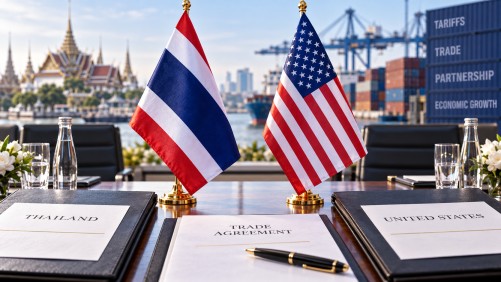
In a climate of shifting international trade policies, Thailand is pushing forward in its negotiations with the United States to secure a reciprocal trade agreement. The Southeast Asian nation is keen to safeguard its exporters from the looming threat of increased tariffs, as they currently face a 12.5% tariff under the US Section 301 measure linked to forced labor concerns.
Despite no set deadline, Thai officials are pressing on with discussions to finalize the Agreement on Reciprocal Trade (ART). These negotiations aim to tackle outstanding issues that could impact the economic relationship between the two countries. Prime Minister Anutin Charnvirakul is anticipated to raise these topics, along with tariff conditions, in talks with US President Donald Trump.
The urgency for Thailand to resolve these trade matters stems from a US investigation launched in March 2026, which scrutinizes structural excess production capacity in Thailand and other major economies. Thai officials have responded by submitting data intended to counter US concerns, arguing that the production capacities in key industries are more extensive than previously assessed by American authorities. They hope to influence a reassessment from Washington that could prevent additional duties on Thai exports.
Thailand’s strategy includes an aspiration to attain tariff treatment similar to that of regional competitors like Malaysia and Indonesia. An ART is seen as a potential pathway to enhance market access and provide a more stable economic environment for Thai exporters, though the specifics of the tariff terms are still being ironed out.
The proposed agreement would not only address tariff issues but also aim to alleviate US concerns over trade barriers, investment, and access to Thailand’s market. For the agreement to take effect, it would require approval through Thailand’s domestic legislative procedures, a step that underscores the complexity and importance of these ongoing negotiations.