
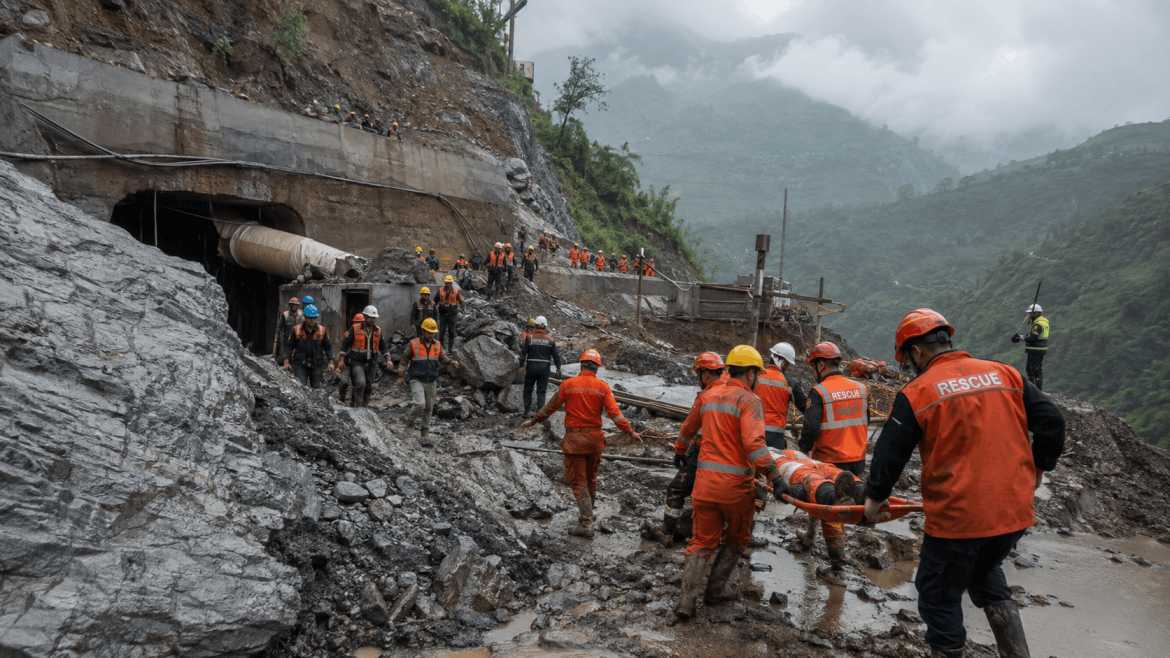
In the aftermath of devastating flash floods, rescue operations are intensifying in Nepal to save over 900 hydropower workers feared trapped in underground tunnels across multiple power projects. The disaster has resulted in a rising death toll, nearing 940 within Nepal and additional fatalities in Tibet. As the search continues, thousands remain missing on both sides of the border, and the urgency grows as oxygen levels in the tunnels decrease, casting doubt on the chances of survival for those still trapped.
The catastrophic flooding hit hardest in the Rasuwa and Nuwakot districts, where approximately 500 workers are believed to be stuck in hydropower site tunnels. Survivors have recounted the harrowing moments when the disaster struck, leaving many of their colleagues trapped inside. Rescue teams face immense challenges, including destroyed infrastructure, unpredictable floodwaters, and difficult terrain. Helicopters have become vital in these efforts, while neighboring countries supply temporary bridge materials to restore access. Blasting operations are underway to clear debris-clogged tunnels, which are crucial for reaching the trapped individuals, as the disaster has significantly impacted Nepal’s power generation capabilities.
Conditions within the tunnels are grim, with mud levels reaching chest height and visibility severely compromised. Despite these daunting circumstances, some rescuers remain cautiously optimistic, hoping that certain safe zones within the tunnels might have shielded some workers. The disaster’s impact extends far beyond the immediate rescue operations, as it has devastated entire communities and sparked renewed discussions on the effects of climate change on glacial and mountainous regions. Nepal’s leadership has labeled this flooding as an unprecedented natural disaster, prompting the mobilization of tens of thousands of security forces and volunteers to aid in the response.
This tragic event has prompted a significant international response, with countries offering specialized rescue teams, financial assistance, and technical support, highlighting the crisis’s magnitude. Among the scenes of destruction, moments of hope have emerged, such as the rescue of a young child from the mud. However, concerns have also been raised regarding the flow of glacial and water-level data between neighboring countries. Some officials worry that inadequate information-sharing could impede future disaster preparedness in this vulnerable region.