
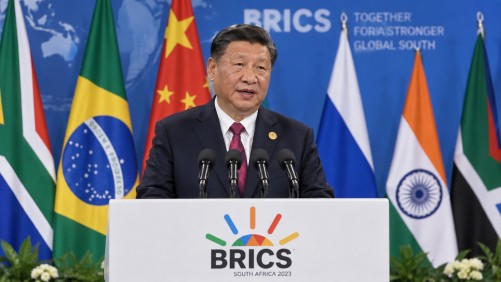
During the second day of the BRICS 2026 Summit, Chinese President Xi Jinping emphasized the importance of bolstering cooperation among countries in the Global South. He introduced five initiatives to enhance collaboration among emerging economies, advocating for a global system where all nations have a say in shaping the rules. Xi called upon BRICS members to uphold principles such as international law, sovereign equality, non-interference, and the peaceful resolution of disputes, while firmly opposing the notion that power equates to right and urging for consistent application of rules without double standards.
The proposed initiatives highlight areas critical to future economic growth and development, focusing on artificial intelligence, trade and investment, the digital economy, intelligent manufacturing, and the nurturing of science and technology talent. As part of these efforts, China suggested the establishment of a BRICS AI open-source community. This community would foster collaboration on large language models and work towards building an inclusive AI ecosystem, ensuring all participating nations benefit from technological advancements.
In the realm of trade and investment, China put forward a facilitation initiative aimed at creating a partnership for BRICS special economic zones and launching a new BRICS Forum on Trade in Services. This initiative is designed to streamline trade processes and encourage investment across member countries, thereby enhancing economic ties and mutual growth.
The digital cooperation initiative proposed by China includes developing a BRICS digital ecosystem cloud platform. This platform would support digital skills training and technological exchanges among members, equipping them to thrive in an increasingly digital world. Additionally, the intelligent manufacturing initiative seeks to advance the creation of smart factories and establish common standards, pushing for modernization across the manufacturing sector.
The final initiative focuses on cultivating science and technology talent. It proposes the formation of a BRICS engineer cultivation alliance and the implementation of youth exchange programs. These programs aim to foster innovation and develop a new generation of skilled professionals who can contribute significantly to the technological and scientific advancements within their respective countries.