
Among the names being discussed in connection with Iran’s Supreme Leader succession, one carries particular symbolic weight: Mojtaba Khamenei, the second-eldest son of the late Supreme Leader. A cleric who has cultivated ties within the IRGC and the intelligence services over many years, Mojtaba is one of the most frequently mentioned potential successors — and one of the most controversial.
Dynastic succession would be deeply at odds with the Islamic Republic’s self-presentation as a meritocratic theocracy governed by religious qualification rather than birth. The Velayat-e Faqih doctrine, as articulated by the system’s founders, explicitly rejects the kind of inherited authority associated with traditional monarchies. For Mojtaba to become Supreme Leader would be to introduce a quasi-dynastic element into a system that claims to be its antithesis.
Nevertheless, several factors make him a plausible candidate. He reportedly enjoys strong support from within the IRGC. He has spent years building influence within the system’s security and intelligence structures. And in a transition marked by uncertainty and wartime pressure, familiar and trusted figures have an advantage over unknown quantities.
Critics both inside and outside Iran would view such an outcome as evidence of the Islamic Republic’s profound hypocrisy — the revolutionary republic behaving like the monarchies it claimed to oppose. That perception could further erode the regime’s legitimacy, particularly among younger Iranians who are already deeply alienated.
Whether Mojtaba Khamenei is ultimately selected, or whether the Assembly of Experts chooses a more conventionally qualified cleric, the selection process itself will be a crucial test of whether the Islamic Republic can manage a historic transition while at war and under international scrutiny.
Mojtaba Khamenei: The Son Who Could Inherit a Nation
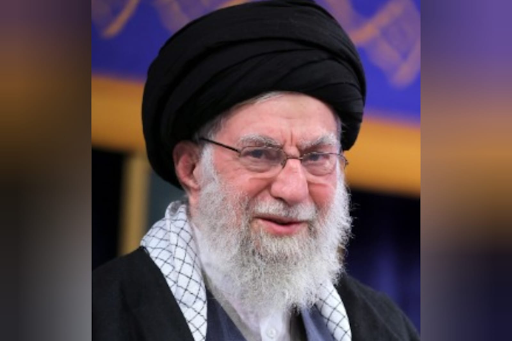
Photo by khamenei.ir, via wikimedia commons
19