
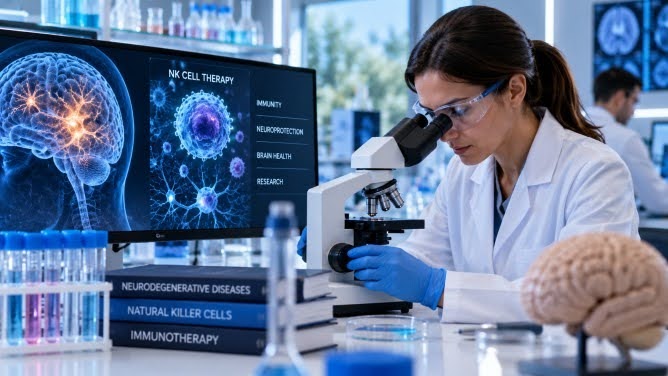
Research into neurodegenerative diseases such as Alzheimer’s, Parkinson’s, ALS, and multiple sclerosis is increasingly focusing on Natural Killer (NK) cells. These immune cells, part of the innate immune system, are known for their ability to detect and react to infected, stressed, or abnormal cells. Additionally, they can modulate inflammatory responses by interacting with other immune cells and releasing signaling molecules. Although the potential of NK cell therapy is being explored, scientists caution that clinical evidence is still in its infancy and has not yet proven NK cell therapy as a viable treatment for these disorders.
The intersection of immune activity and neurodegeneration is drawing significant interest from researchers. Conditions like Alzheimer’s and Parkinson’s disease involve chronic inflammation and the buildup of abnormal proteins, leading scientists to explore how immune cells might impact these processes in the brain. In a 2025 Phase I clinical study, expanded NK cells were tested on patients with Alzheimer’s disease. The study, which included 11 participants with 10 being evaluable, administered intravenous infusions of autologous, non-genetically modified expanded NK cells at three-week intervals. The study’s primary goal was to assess safety while also observing cognitive changes and cerebrospinal fluid biomarkers related to neuroinflammation and neurodegeneration.
Preliminary results from the Alzheimer’s study showed no adverse effects linked to the NK cell product, and some changes were noted in cognitive measures and biomarkers such as pTau181 and GFAP. However, this initial study was not designed to determine whether NK cell therapy could prevent or slow Alzheimer’s disease, signaling the need for larger, randomized controlled trials to establish any meaningful clinical benefits. Meanwhile, studies related to Parkinson’s disease, such as a 2020 study published in the Proceedings of the National Academy of Sciences, indicate that NK cells might interact with and degrade alpha-synuclein aggregates, which are implicated in the disease. Yet, these findings remain largely in the preclinical stage and do not confirm that NK cell therapy can treat Parkinson’s in humans.
The role of NK cells in neurological diseases is intricate, with different NK cell populations potentially having varied functions based on the disease type, stage, and tissue environment. This complexity means simply increasing NK cell numbers might not yield beneficial outcomes. Researchers continue to explore which NK cell types, activation states, doses, and schedules might be effective. Critical questions remain unanswered, such as how well infused NK cells can interact with the central nervous system, the duration of their activity, the patient demographics that could benefit, and the potential for altering long-term disease progression.
In summary, while NK cells are established as active components of the immune system with a role in immune surveillance and regulation, whether they can be used therapeutically for neurodegenerative diseases remains unproven. Current evidence suggests they may interact with neuroinflammation and abnormal protein aggregates, particularly alpha-synuclein, but their application as a treatment is still under investigation. Individuals considering cellular therapies should consult healthcare professionals and review the available scientific evidence and safety information. This article is intended for educational purposes and does not constitute medical advice or a treatment offer, emphasizing that NK cell therapy for neurodegenerative diseases remains experimental.
Legal Disclaimer: The information contained in this article has been provided by independent third-party contributors, clients, or content partners. We do not independently verify the accuracy, completeness, legality, ownership, licensing, or reliability of submitted content, including text, images, videos, trademarks, or other media materials. The submitting party is solely responsible for ensuring that all content, including images and media assets, complies with applicable copyright, trademark, licensing, and intellectual property laws. We disclaim liability for any unauthorized use of copyrighted or proprietary materials by third parties. If you believe that any content published on this platform infringes your intellectual property rights, kindly contact the author above for prompt review and resolution.