
Vietnam is setting its sights higher, as recent resolutions from the Politburo indicate a shift from merely expanding the number of enterprises to developing corporations that can compete on a regional level and gradually enter the global market. Resolution No. 68-NQ/TW, introduced by the Politburo in May of last year, aims to foster the growth of 2 million active enterprises by 2030, including at least 20 large corporations that participate in global value chains. Following this, Resolution No. 79-NQ/TW, issued in January, focuses on state-owned enterprise development, setting a goal for 50 state-owned enterprises to rank among Southeast Asia’s top 500 companies and for one to three to be among the world’s top 500 by 2030.
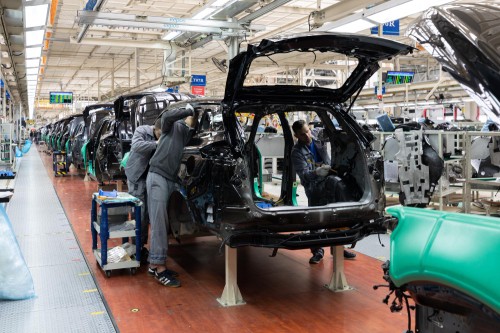
Vietnam’s economic landscape has evolved significantly since the Đổi mới reforms began in 1986. Notable companies have emerged, like THACO, which has established one of Southeast Asia’s largest automobile and mechanical engineering production ecosystems in Quảng Nam Province. VinFast has also made headlines as Vietnam’s first electric vehicle manufacturer, with a factory in Hải Phòng and a listing on the Nasdaq stock exchange, selling vehicles in markets including North America and Europe. Other successful enterprises include Hòa Phát Group, a leading steel manufacturer in Southeast Asia, and FPT, a major information technology firm operating in numerous countries.
In consumer goods, Vinamilk stands out with its dairy products reaching over 50 countries, while Masan Group has developed a vast consumer ecosystem. Vingroup has undertaken unprecedented projects in urban development and other sectors, while companies like Sun Group and BRG Group have invested heavily in tourism infrastructure. Despite these successes, Vietnam’s nearly 1.1 million active enterprises face challenges related to capacity and depth, with a heavy reliance on capital rather than industrial focus, according to experts like Đậu Anh Tuấn and Nguyễn Đức Hiển.
Economists argue that transforming Vietnam into a modern industrialized nation by 2045 will require the emergence of strong economic groups that can lead the economy and withstand global fluctuations. Trần Đình Thiên suggests a shift in policy towards targeted support for businesses with leadership potential, moving away from broad-based support that primarily benefits smaller enterprises. Mastering technology and strategically selecting priority industries are seen as crucial steps in this journey, with lessons to be learned from countries like Japan, South Korea, and China.
The resolutions on private and state-owned enterprise development are establishing a coordinated policy framework for the growth of Vietnamese enterprises. Opportunities are emerging, but the challenge lies in effective implementation and consistency in pursuing these development goals. If successful, Vietnam could see the rise of economic groups with regional and global influence, contributing to the nation’s aspiration to become a formidable player on the international economic stage.