
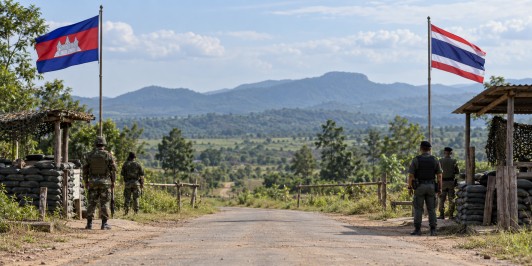
The ongoing tension between Cambodia and Thailand over disputed border territories has seen a temporary ceasefire, yet the situation remains complex and unresolved. This ceasefire, which took effect on December 27 following a mutual agreement, is not intended to redefine the international boundary or determine the ownership of contested lands, according to Cambodian officials.
Cambodian Information Minister Neth Pheaktra emphasized that the ceasefire agreement, reached in December, serves to maintain current military standings and ensure the safe return of over 20,000 displaced civilians. However, Pheaktra accused Thai forces of altering the status quo by fortifying their positions in areas claimed by Cambodia. These actions allegedly include the installation of barbed wire, the construction of roads and military facilities, and other activities that could potentially solidify Thai claims on the disputed land.
While Cambodia maintains that the territory in question is under its sovereignty, Thailand has taken steps to present its side of the story to the international community. Thai authorities have escorted foreign delegates, ASEAN observers, and international journalists to areas near the border, such as the O’Smach casino area and Choam crossing. During these visits, Thailand has made claims regarding the utilization of casino buildings and alleged cross-border criminal activities, which Cambodia disputes.
Despite the ceasefire, the underlying issues between the two nations remain unresolved, with both sides holding firmly to their territorial claims. The Cambodian government insists that the agreement in place should not influence the ultimate determination of the international border, highlighting the importance of civilian safety as a measure of the ceasefire’s effectiveness.
As the situation develops, the international community continues to monitor the fragile peace, hoping for a resolution that respects the rights and safety of the civilians affected by the longstanding conflict.